Cost to run a mini split in every state
For an 12,000 BTU unit with a CEER of 20, running 8 hours a day, 30 days a month, at each state's average residential electricity rate (August 2026, EIA). Click a state for more detail.
| State | Rate | Per hour | Per month | Per year |
|---|---|---|---|---|
| Nevada | 12.72¢ | $0.08 | $18.32 | $219.80 |
| Louisiana | 12.87¢ | $0.08 | $18.53 | $222.39 |
| North Dakota | 13.31¢ | $0.08 | $19.17 | $230.00 |
| Utah | 13.31¢ | $0.08 | $19.17 | $230.00 |
| Idaho | 13.37¢ | $0.08 | $19.25 | $231.03 |
| Tennessee | 13.42¢ | $0.08 | $19.32 | $231.90 |
| Nebraska | 13.54¢ | $0.08 | $19.50 | $233.97 |
| Kentucky | 13.80¢ | $0.08 | $19.87 | $238.46 |
| Arkansas | 14.37¢ | $0.09 | $20.69 | $248.31 |
| Mississippi | 14.43¢ | $0.09 | $20.78 | $249.35 |
| Wyoming | 14.43¢ | $0.09 | $20.78 | $249.35 |
| Washington | 14.63¢ | $0.09 | $21.07 | $252.81 |
| Oklahoma | 14.82¢ | $0.09 | $21.34 | $256.09 |
| North Carolina | 14.95¢ | $0.09 | $21.53 | $258.34 |
| Florida | 14.99¢ | $0.09 | $21.59 | $259.03 |
| Arizona | 15.05¢ | $0.09 | $21.67 | $260.06 |
| South Dakota | 15.15¢ | $0.09 | $21.82 | $261.79 |
| Kansas | 15.47¢ | $0.09 | $22.28 | $267.32 |
| Montana | 15.57¢ | $0.09 | $22.42 | $269.05 |
| South Carolina | 15.76¢ | $0.09 | $22.69 | $272.33 |
| Georgia | 15.90¢ | $0.10 | $22.90 | $274.75 |
| Texas | 15.91¢ | $0.10 | $22.91 | $274.92 |
| Oregon | 15.92¢ | $0.10 | $22.92 | $275.10 |
| Missouri | 16.02¢ | $0.10 | $23.07 | $276.83 |
| West Virginia | 16.31¢ | $0.10 | $23.49 | $281.84 |
| Alabama | 16.33¢ | $0.10 | $23.52 | $282.18 |
| New Mexico | 16.51¢ | $0.10 | $23.77 | $285.29 |
| Indiana | 17.02¢ | $0.10 | $24.51 | $294.11 |
| Iowa | 17.06¢ | $0.10 | $24.57 | $294.80 |
| Colorado | 17.17¢ | $0.10 | $24.72 | $296.70 |
| Minnesota | 17.20¢ | $0.10 | $24.77 | $297.22 |
| Virginia | 17.64¢ | $0.11 | $25.40 | $304.82 |
| Delaware | 18.70¢ | $0.11 | $26.93 | $323.14 |
| Illinois | 19.32¢ | $0.12 | $27.82 | $333.85 |
| Ohio | 19.38¢ | $0.12 | $27.91 | $334.89 |
| Wisconsin | 19.41¢ | $0.12 | $27.95 | $335.40 |
| Maryland | 21.40¢ | $0.13 | $30.82 | $369.79 |
| Pennsylvania | 21.77¢ | $0.13 | $31.35 | $376.19 |
| Michigan | 22.99¢ | $0.14 | $33.11 | $397.27 |
| Vermont | 23.84¢ | $0.14 | $34.33 | $411.96 |
| Connecticut | 24.51¢ | $0.15 | $35.29 | $423.53 |
| New Jersey | 24.61¢ | $0.15 | $35.44 | $425.26 |
| District of Columbia | 25.98¢ | $0.16 | $37.41 | $448.93 |
| New Hampshire | 27.64¢ | $0.17 | $39.80 | $477.62 |
| Rhode Island | 28.18¢ | $0.17 | $40.58 | $486.95 |
| New York | 28.65¢ | $0.17 | $41.26 | $495.07 |
| Alaska | 29.41¢ | $0.18 | $42.35 | $508.20 |
| California | 29.75¢ | $0.18 | $42.84 | $514.08 |
| Massachusetts | 30.48¢ | $0.18 | $43.89 | $526.69 |
| Maine | 32.11¢ | $0.19 | $46.24 | $554.86 |
| Hawaii | 47.18¢ | $0.28 | $67.94 | $815.27 |
How the cost is calculated
Divide the cooling capacity by the efficiency ratio: BTU ÷ CEER = watts. An 8,000 BTU unit with a CEER of 11 draws about 730 W while the compressor runs.
How to lower the cost
- Set a steady temperature instead of switching it on and off: inverter units are most efficient running gently.
- Clean the indoor filters every month or two.
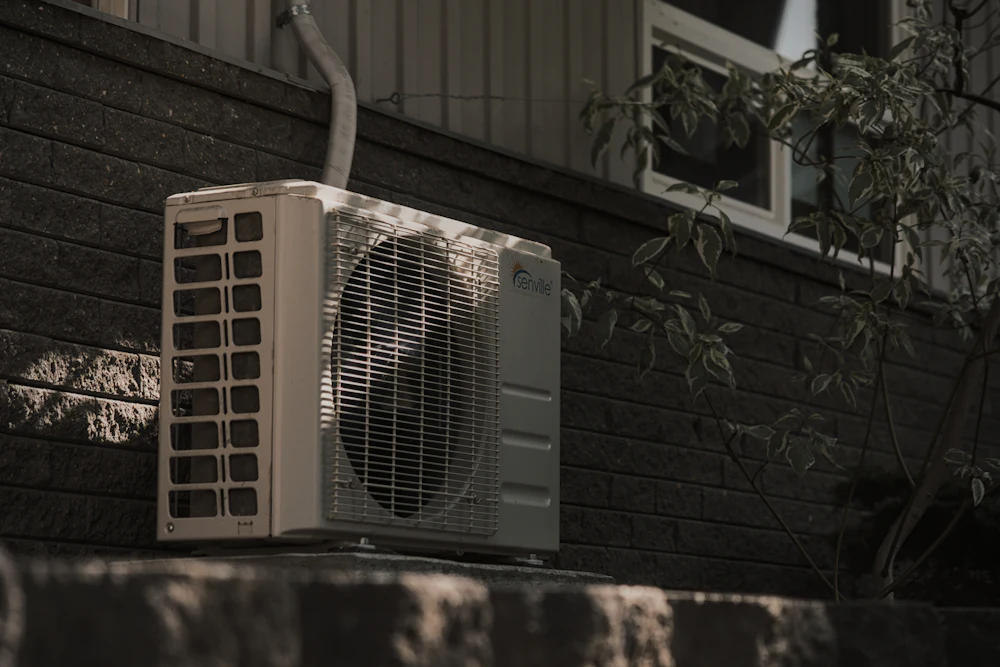
- Keep the outdoor unit clear of leaves and snow.